Carpet Water Damage in Pendleton: Drying Cost Stories
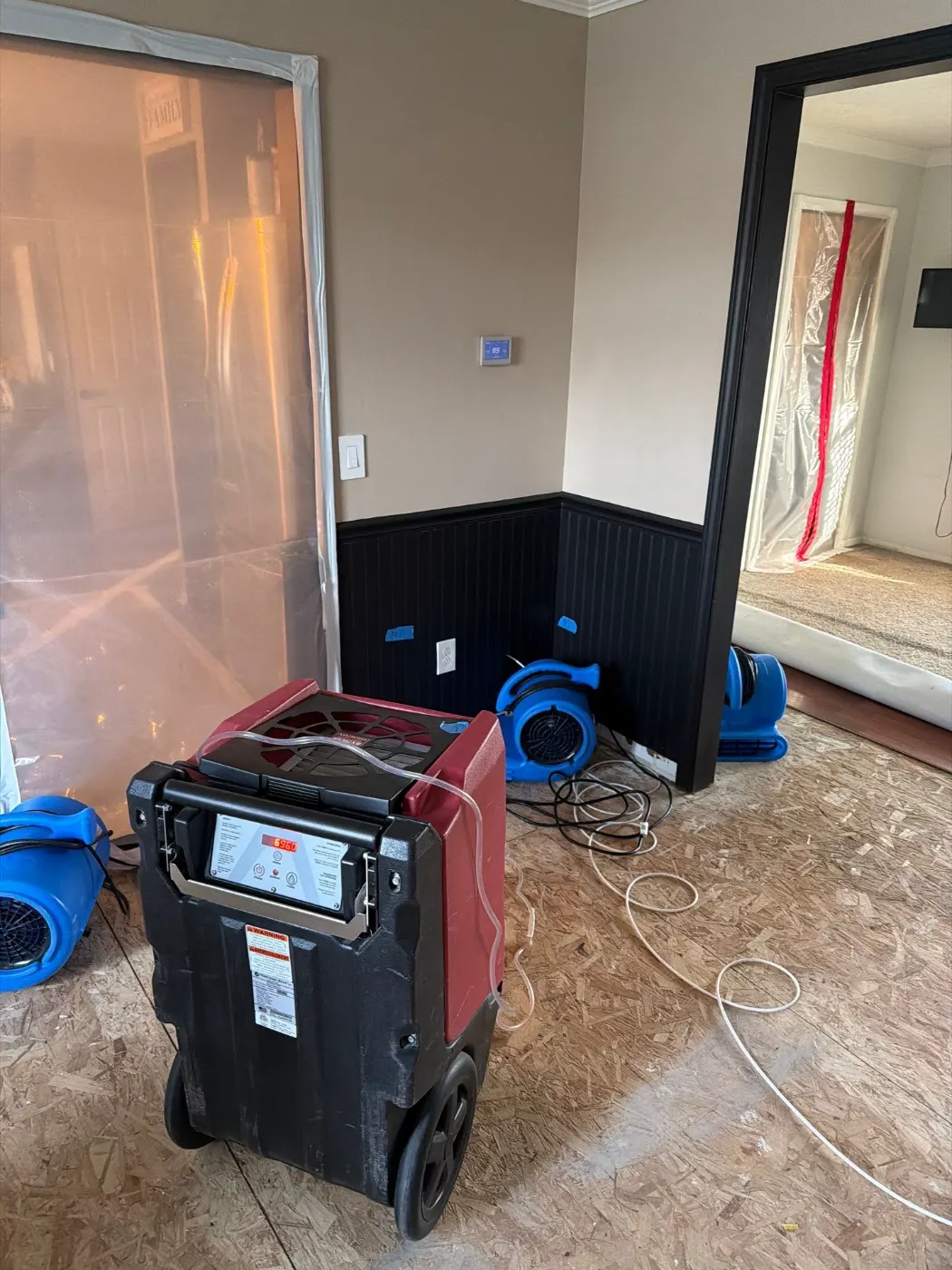
When carpet gets soaked in your Pendleton home, the clock starts immediately. Within 24 to 48 hours, wet carpet stops being a drying problem and starts being a microbial one. The pad underneath holds water like a sponge, the tack strip rusts, the subfloor begins to swell, and the air in the room takes on that sour, humid smell anyone who has dealt with a flood knows on contact. The question most homeowners ask Pendleton Water Restoration first is simple. What is this going to cost to dry properly, and can the carpet be saved at all?
The honest answer requires more than a flat rate. Carpet drying cost in Pendleton depends on the water category (clean, grey, or black), the square footage affected, how long the water sat, what is under the carpet, and whether the pad needs replacement. A bedroom with a slow supply line leak caught in two hours is a very different job than a finished basement that took on six inches from a failed sump pump overnight. Below, we walk through the numbers you can actually plan around, the variables that move those numbers up or down, and what we tell homeowners who call us at midnight wondering if they should rip the carpet out themselves before we arrive. If we cannot help, we will tell you directly. That has been the rule at Pendleton Water Restoration since 2018.
Problem: You Do Not Know If The Carpet Can Be Saved
The biggest stress point is the unknown. You are staring at a wet floor wondering if you just lost $4,000 in flooring or if a fan will fix it. The honest answer depends on three things: what kind of water hit it, how long it has been wet, and what the pad underneath looks like.
Solution: Use The IICRC Category And Time Test
Clean water from a supply line or rainwater (Category 1) that has been wet less than 48 hours is usually save able. Grey water from a dishwasher, washing machine, or aquarium (Category 2) is borderline and depends on dwell time. Black water from a sewage backup or toilet overflow with solids (Category 3) means the carpet and pad get cut out and hauled away. No exceptions. There is no chemical that makes contaminated carpet safe for a crawling toddler.
Carpet age and fiber type also matter. A five year old nylon Berber that took on clean water for six hours is a strong candidate for restoration. A fifteen year old polyester cut pile with existing delamination is usually not worth the drying cost, because the latex backing has already started breaking down and the carpet will release from the pad during extraction. Pendleton Water Restoration technicians check seam integrity and backing condition before recommending a save versus replace path, so you are not paying $1,500 to dry a rug that will buckle in three months anyway.
For deeper context on contaminated water, our breakdown of grey water damage and Category 2 cleanup covers exactly what counts and what does not.
Problem: You Are Worried About Mold And Your Family
Wet carpet in a warm Pendleton basement or finished room is a petri dish. Spores germinate in 24 to 48 hours when humidity stays above 60 percent.
Solution: Control Humidity First, Then Dry
Before fans go on, we set commercial dehumidifiers to pull ambient humidity below 50 percent. Otherwise air movers just blow wet air around the room. We monitor daily, log readings, and adjust equipment until moisture content matches dry baseline. This is the part DIY rentals get wrong. A box store fan plus an open window in July Indiana humidity does almost nothing.
Watch for the early warning signs even after the room looks dry: a sour or earthy smell when you walk in, visible dark spots along the tack strip, discoloration creeping up the baseboard, or allergy flare ups in family members who were fine the week before. Any one of those means moisture is still trapped somewhere, usually in the pad, the subfloor seam, or behind the drywall where the carpet meets the wall. Catching it at the smell stage costs a few hundred dollars in re drying. Catching it at the visible mold stage means containment, HEPA filtration, and a remediation invoice that can run $2,000 to $8,000.
Get A Straight Answer Tonight, Not Next Week
Wet carpet is a clock problem. Every hour the pad sits saturated, your options shrink and your costs climb. If you are in Pendleton and need a real assessment, Pendleton Water Restoration can have a technician on site with moisture meters, extractors, and a written scope the same day. We will tell you whether your carpet can be saved, what it costs, and what your insurance will likely cover. If replacement is the smarter call, we will say so. Call when you are ready for the honest version.
Problem: You Cannot Get A Straight Price Out Of Anyone
Most Pendleton homeowners call three companies and get three wildly different numbers. One quotes $400. One quotes $3,200. The third refuses to quote at all until they show up.
Solution: Understand What Each Line Item Actually Costs
Professional carpet drying in Pendleton typically falls in these ranges, assuming clean water and a standard residential room:
- Water extraction from carpet and pad: $0.50 to $1.50 per square foot, or $200 to $500 for an average 12x15 room.
- Air movers and dehumidifiers running 3 to 5 days: $75 to $150 per day for equipment, depending on how many units the moisture readings require.
- Antimicrobial treatment to prevent mold growth: $0.20 to $0.40 per square foot, usually $80 to $200 per room.
A full single room dry out from clean water in Pendleton generally lands between $600 and $1,800. If the water hit multiple rooms, traveled into hallways, or soaked the subfloor, expect $2,500 to $6,000. If we have to remove and replace the pad (common after 24 hours of saturation), add $1.25 to $2.50 per square foot. For a fuller picture, our complete water damage restoration cost breakdown shows how these numbers shift by job size.
Problem: You Need This Documented For Insurance
Most carpet water damage claims in Pendleton are covered when the source is sudden and accidental, like a burst pipe or appliance failure. Gradual leaks and flood (rising ground water) are usually excluded.
Solution: Document Everything From Hour One
Take photos before anything moves. Save the broken hose, valve, or appliance part. Get a written scope from your restoration company that lists IICRC categories, daily moisture logs, equipment counts, and dry standards achieved. We provide that documentation on every job because adjusters approve faster when the paperwork is clean. If your situation involves a finished lower level, our notes on flooded basement cleanup and professional drying cover the claim language adjusters look for.
Solution: Call Before You Cancel The Claim
Homeowners sometimes get an out of pocket estimate, panic at the deductible math, and decline to file. That is often a mistake. Pendleton Water Restoration can walk through the likely covered scope with you before you commit either way, and in Pendleton most sudden discharge losses clear the deductible easily once subfloor drying and pad replacement are factored in. A ten minute phone consult costs nothing and usually saves four figures.
Problem: The Pad Underneath Is Holding Water You Cannot See
Carpet fibers dry fast. The pad does not. Homeowners run a shop vac, feel the surface dry by the next day, and assume they are fine. Two weeks later the room smells musty and the baseboards are warping.
Solution: Get A Moisture Reading, Not A Hand Test
We use penetrating moisture meters and thermal imaging to read what is happening under the carpet and into the subfloor. A normal subfloor reads 12 to 16 percent moisture content. Anything above 19 percent is feeding mold within 48 to 72 hours. If your pad is saturated and the subfloor is reading high, lifting the carpet, removing the pad, drying the subfloor directly, and re installing fresh pad is almost always cheaper than tearing out a moldy room six months later. If you suspect water has migrated further, our guide to subfloor water damage detection walks through what to look for.
Frequently Asked Questions
How fast does carpet need to be dried after water damage?
Within 24 to 48 hours for Category 1 clean water. After that, microbial growth begins and the job shifts from drying to remediation. Pendleton Water Restoration crews respond across Pendleton within 60 to 90 minutes of your call.
Can wet carpet be saved or does it always need replacement?
Clean water carpet caught within 48 hours is usually salvageable. Grey water requires pad replacement at minimum. Black water or sewage means full carpet and pad removal. We assess each Pendleton job on-site before quoting.
Does homeowners insurance cover professional carpet drying?
Sudden and accidental water events like burst pipes or appliance failures are typically covered. Gradual leaks and flood from outside are usually not. Pendleton Water Restoration provides full IICRC documentation for your Pendleton adjuster.
How many days will drying equipment run in my home?
Most Category 1 jobs in Pendleton take 3 to 5 days of continuous air mover and dehumidifier runtime. Dense pad, hardwood transitions, or hidden moisture can extend that to 7 days.
What does professional carpet drying cost per square foot?
In Pendleton, extraction runs $0.50 to $1.25 per sq ft, drying equipment adds $35 to $130 per unit per day, and full mitigation typically lands between $2.50 and $6.00 per sq ft depending on category and pad decisions.
Have a restoration question?
Our IICRC certified Pendleton crew is ready to help. Free assessments, estimate based on what we can sees, no pressure.